01
Modern double glazing
A sealed double-glazed unit can improve thermal performance and may help reduce outside noise compared with single glazing. Its thickness and weight mean the sash design and frame must be suitable.
When original windows cannot reasonably be restored—or when you want to explore improved thermal and sound insulation—we can discuss made-to-measure sash frames and glazing options that respect the proportions of your property.
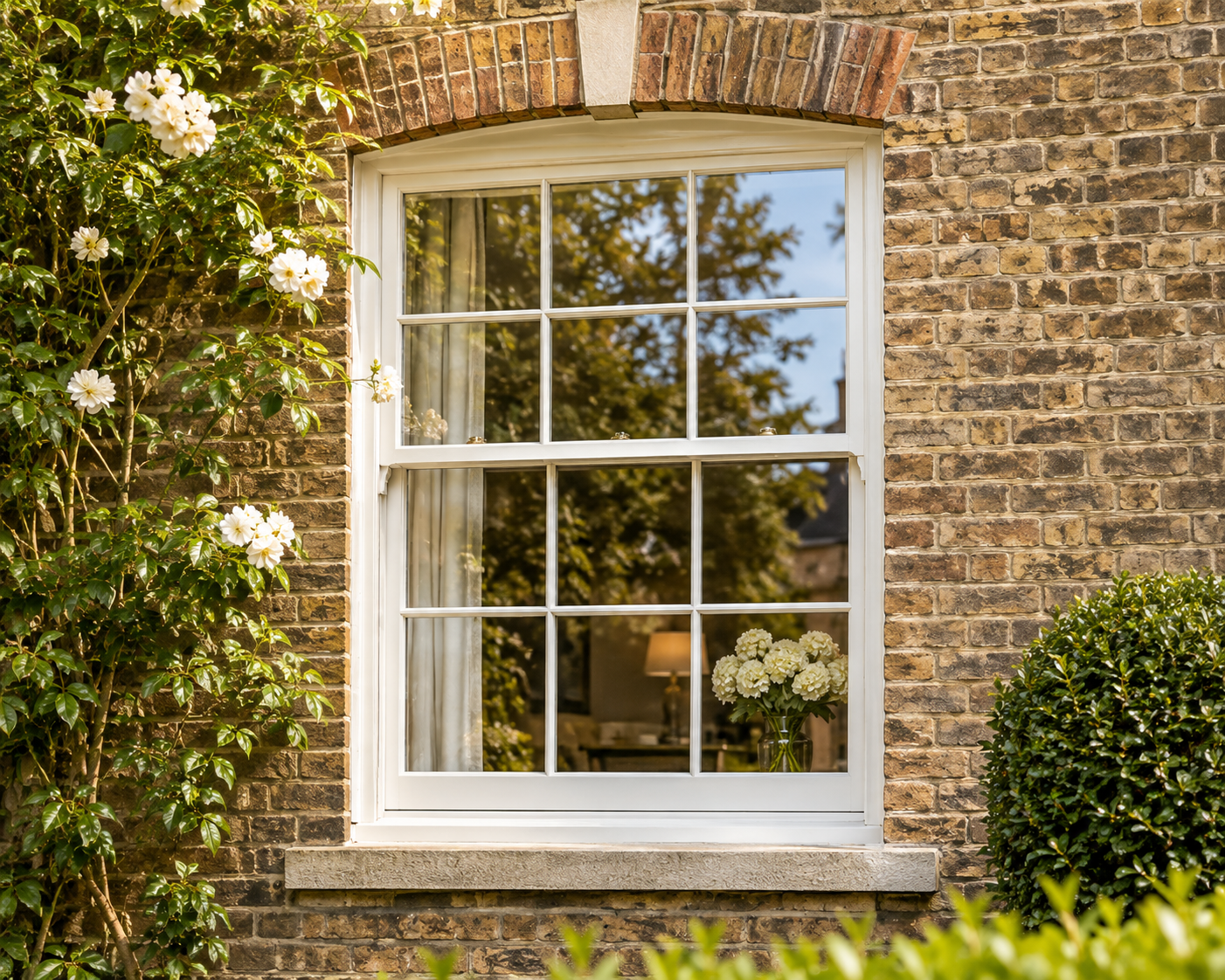
Many traditional sash windows can be repaired or restored, but not every window is a suitable candidate. Extensive decay, failed components or a frame that is beyond practical repair may mean replacement is the more sensible route.
New sash frames and made-to-measure sashes can be designed around the opening and the look of the existing windows. If the original frame is sound and suitable, it may also be possible to retrofit a slimmer modern glazing unit instead of replacing the whole window.
We’ll talk through the condition of the existing windows, the appearance you want to retain and what the structure can accommodate before recommending a direction.
The right glazing depends on sash dimensions, frame depth, weight, sightlines and the performance you’re aiming for. These options can be discussed as part of a new sash or, where feasible, a retrofit.
Glazing specifications and results vary. No option can guarantee a particular energy saving or level of sound reduction; the full window, installation quality, ventilation and surrounding building all affect performance.
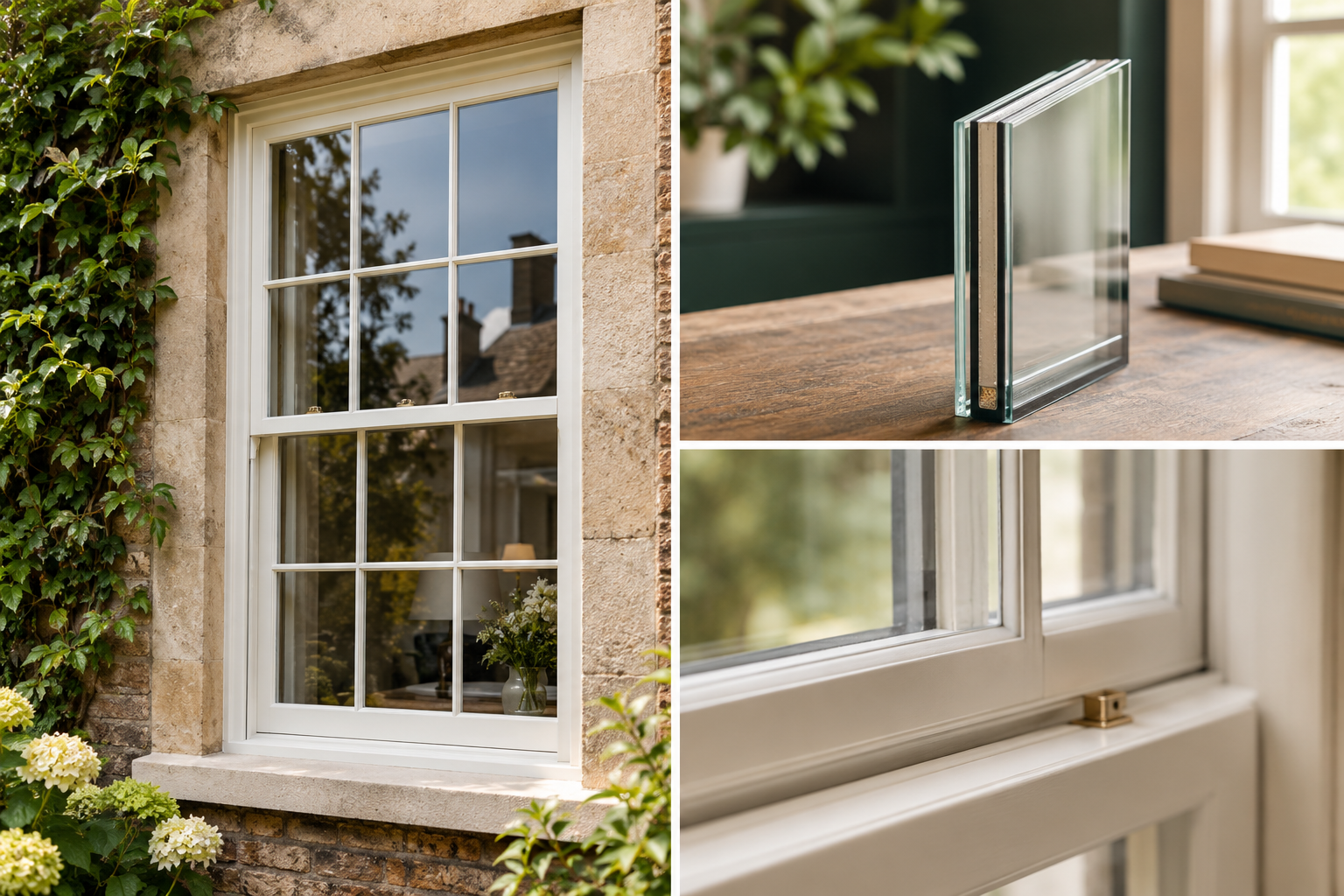
If the frame and sash are structurally sound, retrofitting slimline double glazing or vacuum glazing may be an alternative to full replacement. It can be a useful route where improving comfort is a priority but preserving as much existing material as possible matters too.
There are practical limits: the rebate depth, glazing bars, condition of the timber, sash weight and balance system all affect what can be fitted safely and neatly.
Glazing is one part of the whole window. We look at the full assembly and your priorities, rather than treating glass as the only factor.
Glazing choice, draughts, frame condition and installation details all contribute to how warm a room feels and how much heat escapes.
Noise reduction depends on the glass build-up, pane thickness, gaps and seals, and the type of noise. We can discuss the options without promising a fixed result.
Glazing bars, reflections, frame profiles and the building’s status may influence what is appropriate. Listed buildings and conservation areas can require consent or specialist advice.
Tell us about the property, the condition of your sash windows and what you’d like to improve. We can help you understand which options are worth investigating.